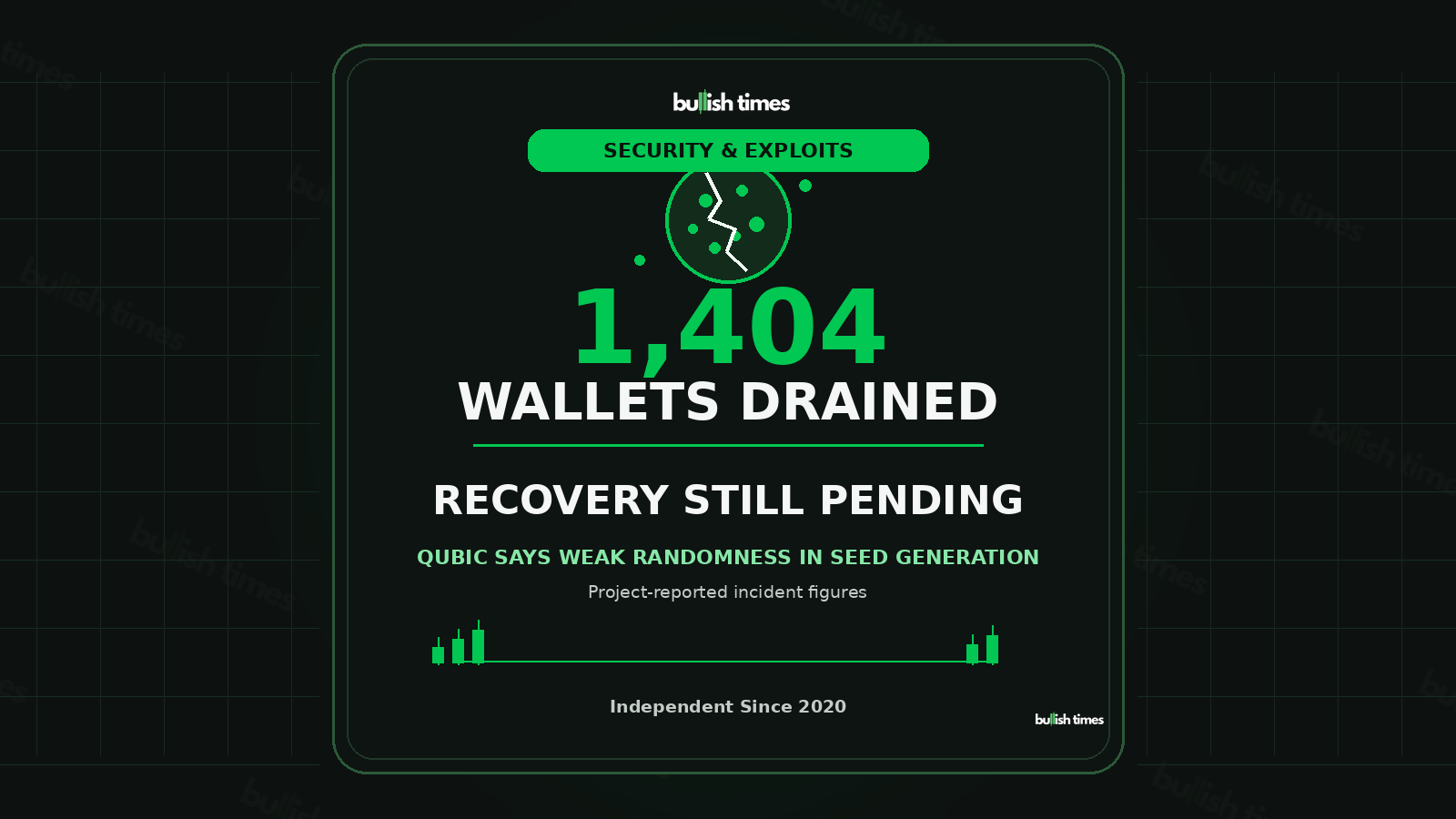
A US Special Forces soldier bet $33,000 on the capture of a dictator he was personally assigned to capture — and walked away with $409,000 in crypto profits. Welcome to the prediction market’s first proper espionage scandal.
The Department of Justice unsealed an indictment on Thursday accusing Master Sergeant Gannon Ken Van Dyke, a 38-year-old Green Beret stationed at Fort Bragg, of using classified intelligence from Operation Absolute Resolve to place winning bets on Polymarket. It marks the first time the United States has brought criminal charges against anyone for insider trading on a prediction market — and it could not have come at a worse time for an industry already under siege.
The Operation, the Account, and the 13 Bets
Van Dyke was part of the team that planned and executed the predawn raid on Nicolás Maduro’s Caracas compound on 3 January 2026. According to prosecutors, he had access to sensitive, nonpublic, classified details about the operation from as early as 8 December 2025. He had signed nondisclosure agreements barring him from ever divulging protected information “by writing, words, conduct, or otherwise.”
On 26 December — Boxing Day, no less — Van Dyke allegedly created a Polymarket account. Over the next week, trading under the username “Burdensome-Mix,” he placed approximately 13 bets totalling $33,034. Every single one was a YES position: US forces entering Venezuela, Maduro removed by 31 January, a US invasion by the same deadline, and Trump invoking War Powers.
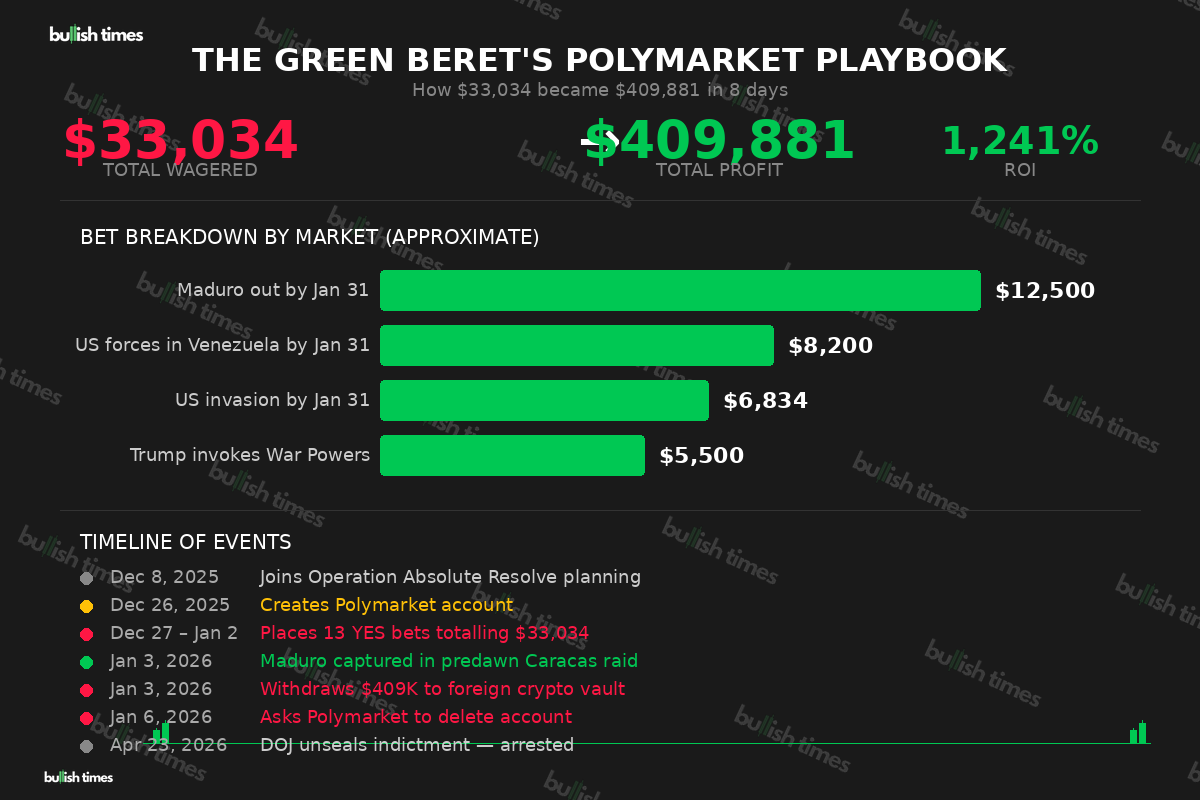
When US Special Forces apprehended Maduro and his wife in the early hours of 3 January, Polymarket resolved several contracts to YES. Hours later, Van Dyke was photographed on the deck of a warship in full military fatigues, carrying a rifle. By that point, according to prosecutors, he had already begun withdrawing his $409,881 in winnings to a foreign cryptocurrency vault.
The Cover-Up That Wasn’t
Van Dyke’s alleged attempts to hide his tracks read like a tutorial in how not to evade federal investigators. He reportedly signed up for Polymarket using his personal email. When online sleuths and journalists began flagging suspiciously large payouts on the Maduro markets, panic apparently set in.
On 6 January, just three days after the raid, Van Dyke allegedly asked Polymarket to delete his account — claiming he had “lost access” to the email address he had used to register. That same day, he changed the email on his cryptocurrency exchange account to an address prosecutors say was not in his name, one that had been created on 14 December 2025. He then shifted funds from the foreign crypto vault into a newly created online brokerage account.
It was, by any standard, a remarkably thin disguise for a man trained in covert operations.
Not the First, and Almost Certainly Not the Last
What makes this case so significant is not just the brazenness of one soldier’s greed — it is the pattern it confirms. In February 2026, Israeli authorities arrested several individuals, charging two with using classified military intelligence to place bets on Polymarket markets related to Iran operations. A separate account, known only as “ricosuave666,” made $155,000 betting on Israeli strikes against Iran in mid-2025 and has never been publicly identified.
A study by Columbia Law School and Haifa University recently estimated that $143 million in suspected insider-trading profits had been extracted from Polymarket — a staggering figure for a platform that positions itself as a transparent, decentralised information market.
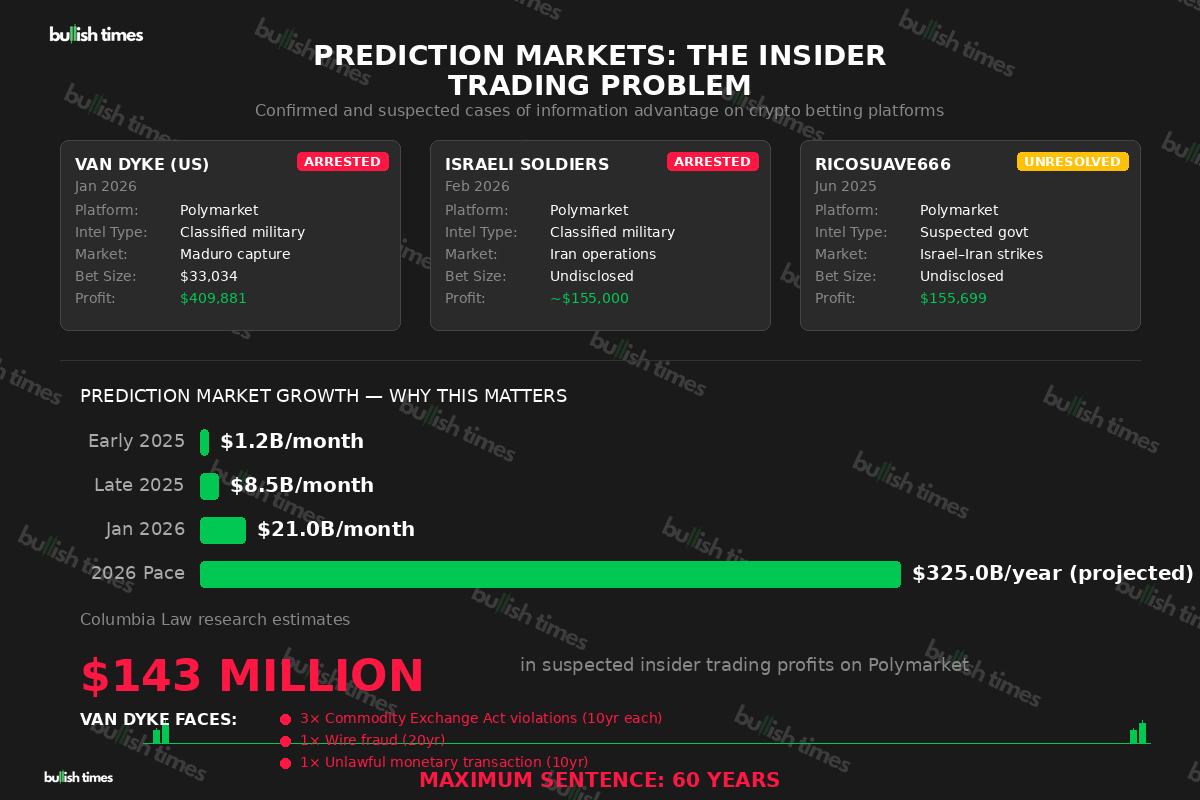
The timing is brutal for Polymarket. Prediction market monthly volumes exploded from $1.2 billion in early 2025 to over $20 billion by January 2026, and the sector is on pace to exceed $325 billion in total volume this year. The Trump administration dropped a criminal investigation into Polymarket and allowed it to open a regulated US exchange. Donald Trump Jr. serves as an adviser to both Polymarket and its rival Kalshi.
Now, the very same administration’s Department of Justice is prosecuting a Green Beret for exploiting the platform.
The Bigger Question: Can Prediction Markets Police Themselves?
Polymarket’s response has been swift and carefully worded. The platform says it identified the suspicious trading, referred the matter to the DOJ, and cooperated with the investigation. Chief legal officer Neal Kumar posted on X: “It’s not anonymous — you will be found just like this guy.”
That is a bold claim for a platform accessible to Americans primarily through VPNs and built on pseudonymous cryptocurrency infrastructure. FBI Director Kash Patel was blunter: “Clearance holders who try to cash in their access will be held accountable.” Acting Attorney General Todd Blanche called prediction markets “a relatively new phenomenon” but stressed that “federal laws protecting national security information fully apply.”
Van Dyke faces five charges: three counts of violating the Commodity Exchange Act (each carrying up to 10 years), wire fraud (up to 20 years), and an unlawful monetary transaction (up to 10 years). The maximum sentence: 60 years in prison.
The broader question is whether Polymarket’s surveillance tools — the same ones that supposedly caught Van Dyke — are sufficient for an industry processing billions in monthly volume. A Columbia Law researcher found that systematic screening could have flagged Van Dyke’s trades in real time. The fact that it took months and a federal investigation to bring charges suggests the platform’s defences are reactive, not preventive.
Prediction markets promised to be the ultimate truth machines — aggregating information faster and more accurately than polls, pundits, or the press. That promise rings rather hollow when the most profitable information advantage comes from a soldier with a security clearance and a Polymarket login.
This is a developing story. Van Dyke is scheduled to appear before US Magistrate Judge Brian S. Meyers. Bullish Times will update as proceedings continue.