A sanctioned wallet is not much of a sanction if the money keeps moving. A new US Senate minority-staff investigation says $34.6 million in USDT left one group of designated wallets before Tether froze most of them.
The accusation lands beside Tether’s own announcement that it helped freeze nearly $550 million in Iran-linked USDT this year. Both figures can be true. The question is whether a freeze arrived early enough to matter — and who is expected to make that call.
What the 846-wallet sample actually shows
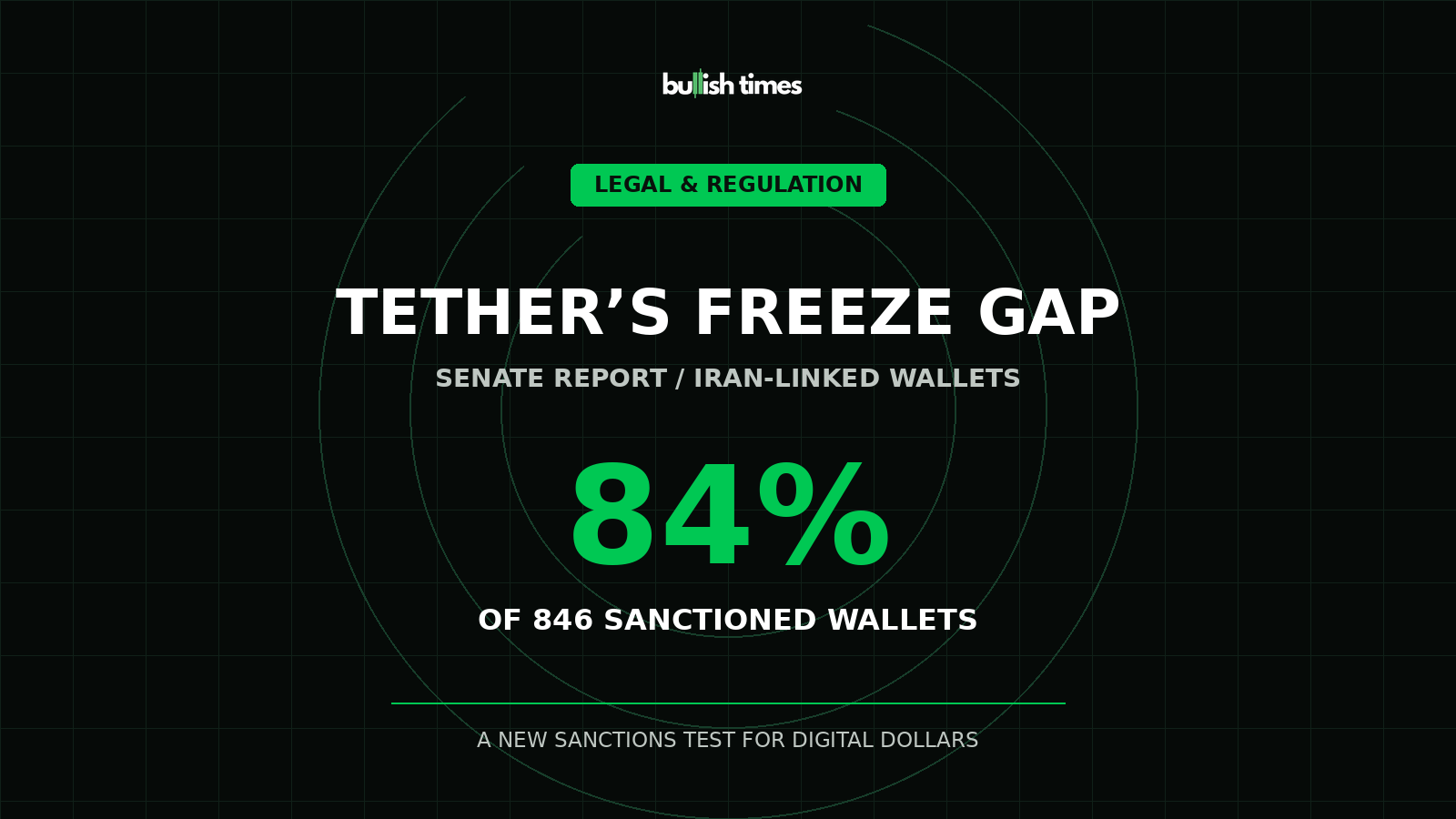
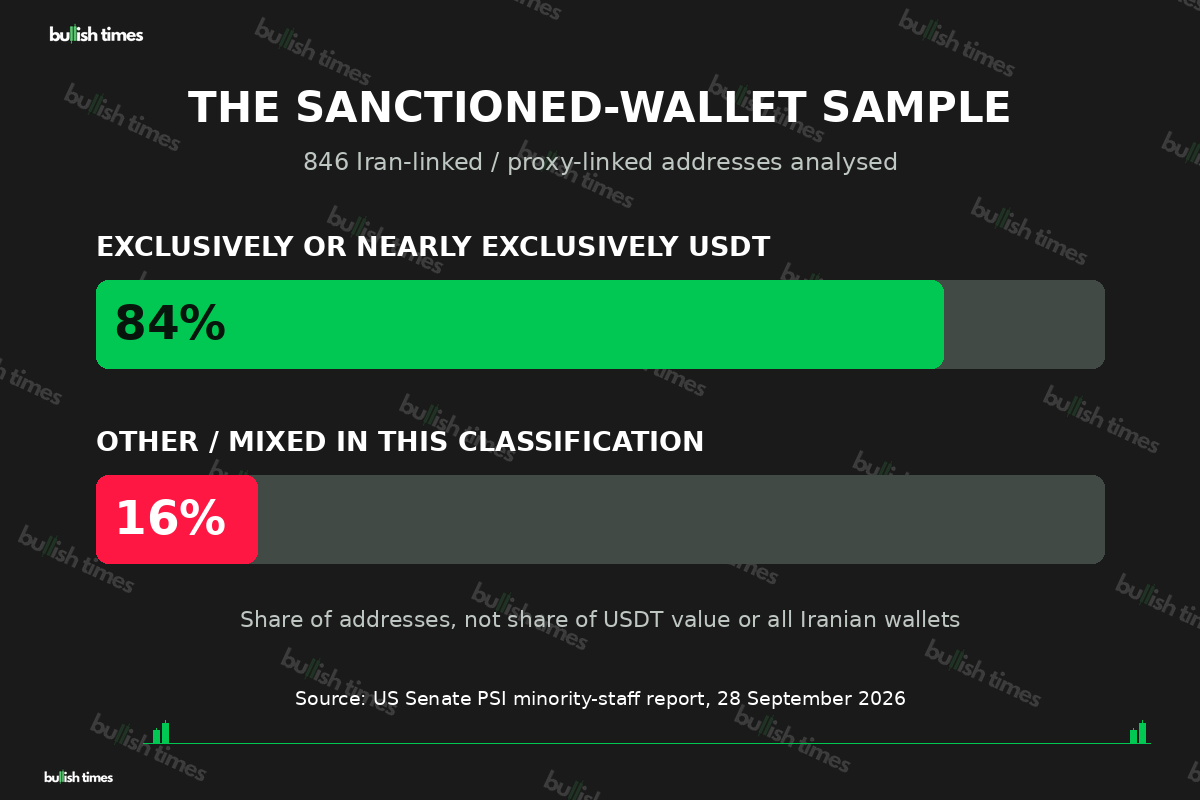
In a report published on 28 September, investigators working for Senator Richard Blumenthal, the ranking Democrat on the Senate Permanent Subcommittee on Investigations, analysed 846 cryptocurrency wallets sanctioned or targeted for seizure over links to Iran and regional proxies. They say 84% transacted exclusively, or nearly exclusively, in Tether’s dollar-pegged USDT.
That is a finding about a selected set of identified addresses, not a claim that 84% of all Iranian cryptocurrency activity uses USDT. Nor does a wallet count tell us the value of transactions in each asset. The distinction matters: dramatic percentages become less useful when the denominator disappears.
The report also traces more than $603 million in USDT received by wallets associated with two sanctioned oil smugglers, Alireza Derakhshan and Arash Estaki Alivand, in a network spanning 2021–25. That is transaction flow attributed by investigators, not a fresh loss, an exchange balance, or evidence that every recipient spent the funds on a specified purpose.
The uncomfortable timing question
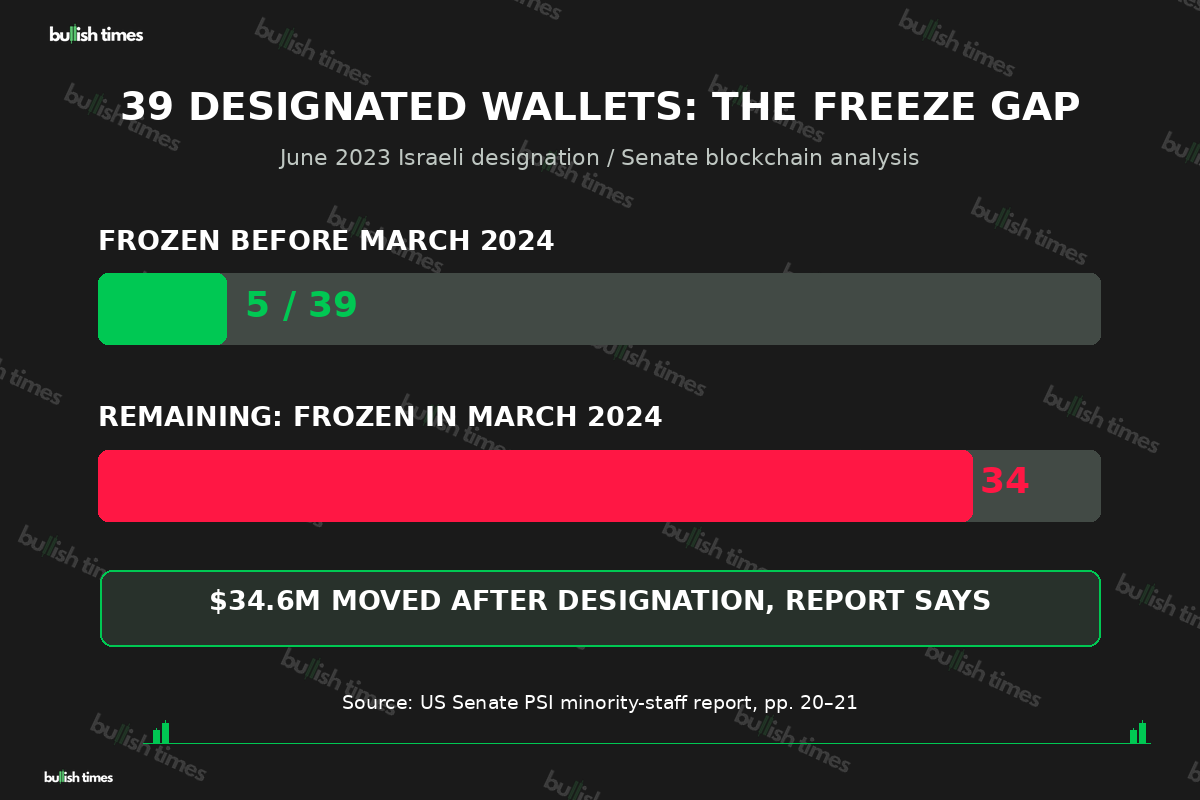
The report’s sharpest case concerns 39 wallets designated by Israel’s National Bureau for Counter Terror Financing in June 2023 as associated with a Hezbollah-linked money launderer. Senate investigators say Tether had blacklisted only five before March 2024; the remaining 34 were frozen that month. Their blockchain analysis estimates that more than $34.6 million in USDT moved out of the designated wallets after the designation.
The report does not establish that Tether knowingly facilitated those transfers, nor does a public designation alone answer what information the issuer received and when. But it makes a straightforward operational challenge: if an issuer can freeze a token, the interval between a credible alert and a freeze deserves scrutiny. A control that works after the funds have travelled is still a control — just not the same protection.
The same report says that, from 2021 to May 2023, it could not identify Tether freezes of wallets designated by the Israeli bureau, despite orders naming Hamas-linked addresses. That is the investigators’ assessment of on-chain records, not a judicial finding about compliance duties.
Tether’s answer is a very different number
In a statement issued on 28 September, Tether says actions involving USDT froze approximately $550 million across Iran-linked wallets identified by US authorities during 2026. It points to more than $344 million across two addresses in April and more than $130 million across four wallets in July. It also cites cooperation with more than 340 law-enforcement agencies in 67 countries.
Chief executive Paolo Ardoino argues that public blockchains give authorities visibility absent from cash and that Tether can act when law enforcement supplies credible information. “Tether has consistently demonstrated that USD₮ is not a haven for sanctioned actors,” he says. Reuters reported both the investigation and that response.
The $550 million freeze figure should not be set against the earlier $34.6 million movement as though one cancels out the other. They concern different wallets and periods, and a frozen balance is not the same thing as transaction flow. What Tether’s evidence does demonstrate is that it has a technical intervention available and says it has used it at scale.
A digital dollar needs a clock, not just a blacklist
The political framing is fierce; the report comes from Democratic minority staff rather than a bipartisan committee vote. Its wallet attributions draw on government designations and additional blockchain analysis, which should be tested case by case. These limitations do not make the freeze-timing question disappear.
Blumenthal has urged Treasury and Justice officials to examine Tether. The useful next step would be a documented chronology for contested addresses: designation date, issuer notification, verification, freeze decision and any intervening transfers. That would let the public distinguish slow action, missing notice, mistaken attribution and genuinely prompt intervention.
Stablecoins promise movement at internet speed. Sanctions enforcement depends on information, authority and sometimes legal process moving fast enough to catch up. Until those timelines are visible, both “we froze hundreds of millions” and “millions moved after designation” describe only half of the system.
The real test is not whether USDT can be frozen; it is when the freeze happens.