Multiple state lawsuits do not prove that ChatGPT harmed anyone. They do show that claims about AI safety are moving from corporate assurances into courtrooms, where product design and consumer protection will have to meet evidence.
On 14 October, multiple state attorneys general filed separate cases against OpenAI over ChatGPT’s alleged effects on young and vulnerable users. The dispute is not simply whether an AI model can make a dangerous reply. It is whether the company’s design, safety representations and protections for minors meet the obligations plaintiffs say state law imposes.
A multistate lawsuit wave—with a count still in dispute
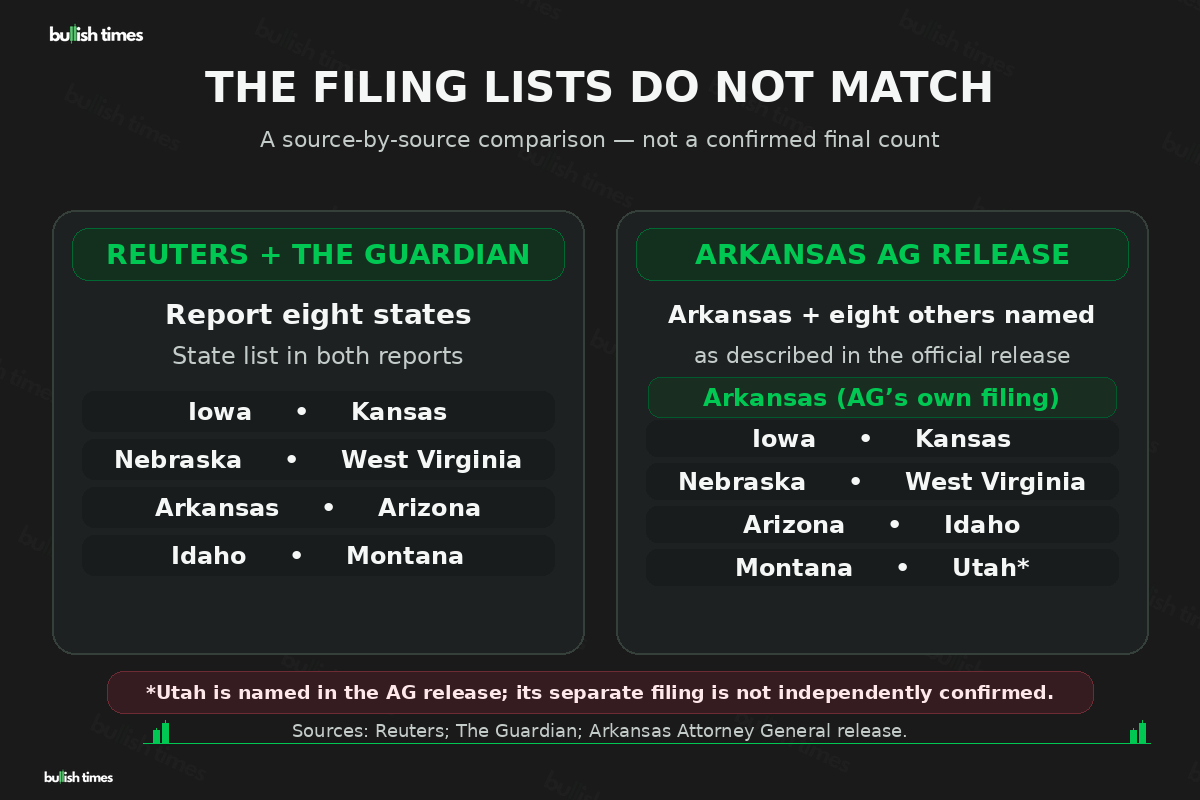
Reuters and The Guardian reported that eight states filed separate suits in their own courts: Iowa, Kansas, Nebraska, West Virginia, Arkansas, Arizona, Idaho and Montana. That is the reported eight-state ChatGPT lawsuit—not one consolidated federal case, and not a ruling against OpenAI.
There is a material wrinkle. Arkansas’s official release says similar suits were filed by eight other attorneys general, naming Utah among them. Added to Arkansas, that wording implies nine states; Utah does not appear in Reuters’ or The Guardian’s eight-state list, and its filing is not independently confirmed here. The responsible description is multiple state cases, while attributing “eight” to those two reports.
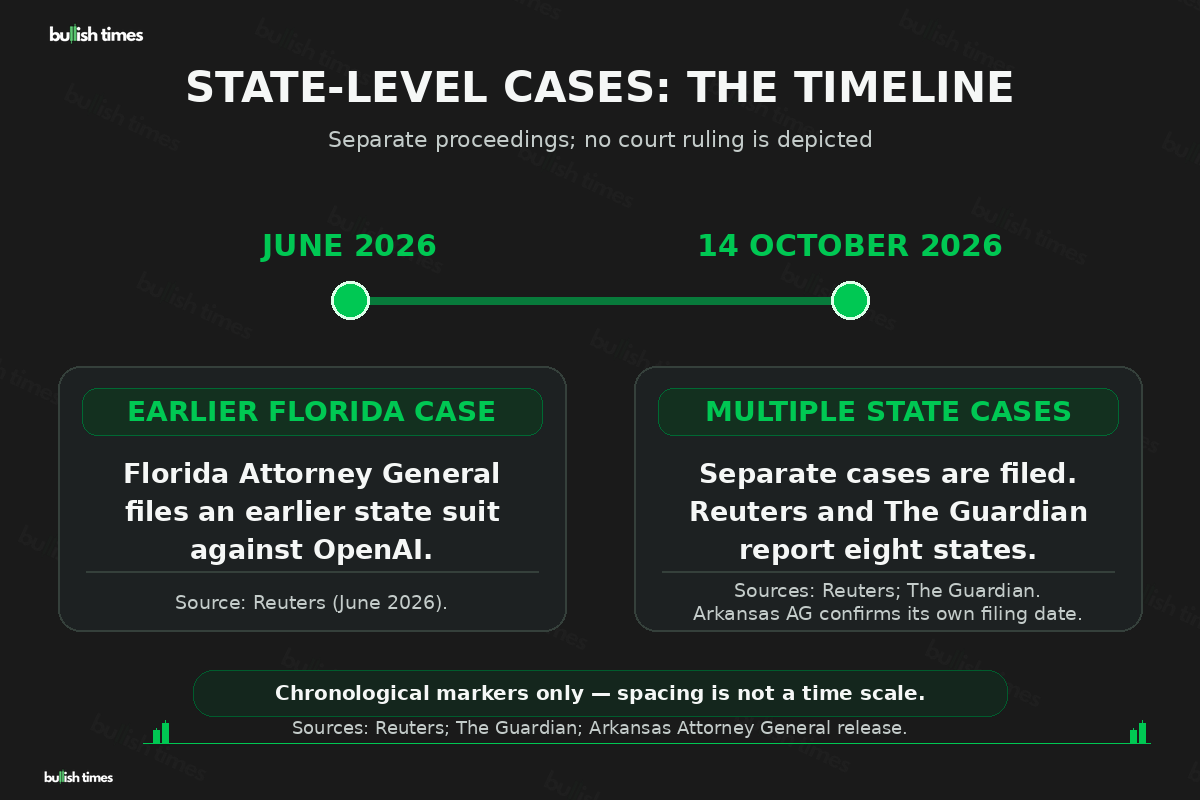
Reuters also distinguishes this October action from Florida’s earlier suit, filed in June. The new development is the spread of separate state-level cases, not a fresh finding in the Florida litigation. Arkansas says its own complaint invokes deceptive-trade and children’s-and-teens’ privacy laws, alongside common-law theories including negligence, design defect and failure to warn. Those are Arkansas’s pleaded grounds, not a verified list of claims in every state.
Serious allegations are not legal findings
The states allege that ChatGPT reinforced delusions, encouraged dangerous behaviour and helped users—including teenagers—plan self-harm or violence. They also allege that OpenAI misled consumers about product safety. These claims are grave; they remain allegations in civil complaints. The reporting and release reviewed for this article do not establish that ChatGPT caused the harms alleged or that OpenAI broke the law.
That distinction matters beyond legal caution. A tragic account can make a powerful case for scrutiny, but an allegation is not by itself proof of causation, a defect or a misleading representation. Courts will need to test what happened, what users were told, what safeguards were present and whether the relevant legal standards were met. Public debate should not turn the complaint into a verdict before that work is done.
At the same time, companies cannot answer every design question with the observation that no system is perfect. If a product is presented as safe for young users, the meaning of that assurance—and the limits attached to it—deserves close examination. The states sue OpenAI over ChatGPT safety by alleging that the gap between reassuring claims and product behaviour is legally significant. Whether they can prove that gap is for the cases to establish.
Safeguards need more than a product-page promise
OpenAI’s response, reported by The Guardian, is that it has built “industry-leading age-specific protections” that many other AI products lack. Spokesperson Drew Pusateri said: “While no system can be perfect, we’ll continue to work with experts to inform our work and build additional safeguards, such as the parental controls, break reminders and age-appropriate model protections that exist today.”
That is the company’s stated position, not independent proof that the measures work in every situation. Yet it identifies the practical questions behind the headline: how protections respond to a young user in distress; what parents can see or control; how a system handles repeated or escalating conversations; and how a company checks whether its protections fail. Those are questions to investigate, not findings this article can supply.
In Arkansas, the attorney general says the complaint seeks clearer disclosure of material risks, restitution, civil penalties, injunctions concerning minors’ data and a pause on certain advanced AI testing and model creation until safeguards are adequate. These are requests for relief, not orders in force. Reuters reports that the states seek product changes and penalties, including limits on models that can improve themselves; the exact requests should not be assumed identical across separate filings.
The test is whether the claims can be proved—and the remedies fit
This is a consequential moment for AI governance because the litigation puts product design, safety representations and minors’ data into the language of state consumer-protection law. But the sharpest response is not to treat any proposed model-development pause as an existing ban, or to presume that a legal complaint settles what a system did. The plaintiffs must substantiate their claims; the company’s assurances also merit evidence, not a free pass.
A sound outcome should distinguish demonstrated risks from speculative ones, and targeted safeguards from broad restrictions whose scope may exceed what a case proves. Courts can assess the claims and the requested remedies on the record before them. In the meantime, the public should be able to tell the difference between a safeguard a company says it has, evidence that it works, and a remedy a state is asking a judge to impose.
The courtroom question is not whether AI can be made risk-free; it is whether safety claims and safeguards can withstand scrutiny when the stakes are human.